
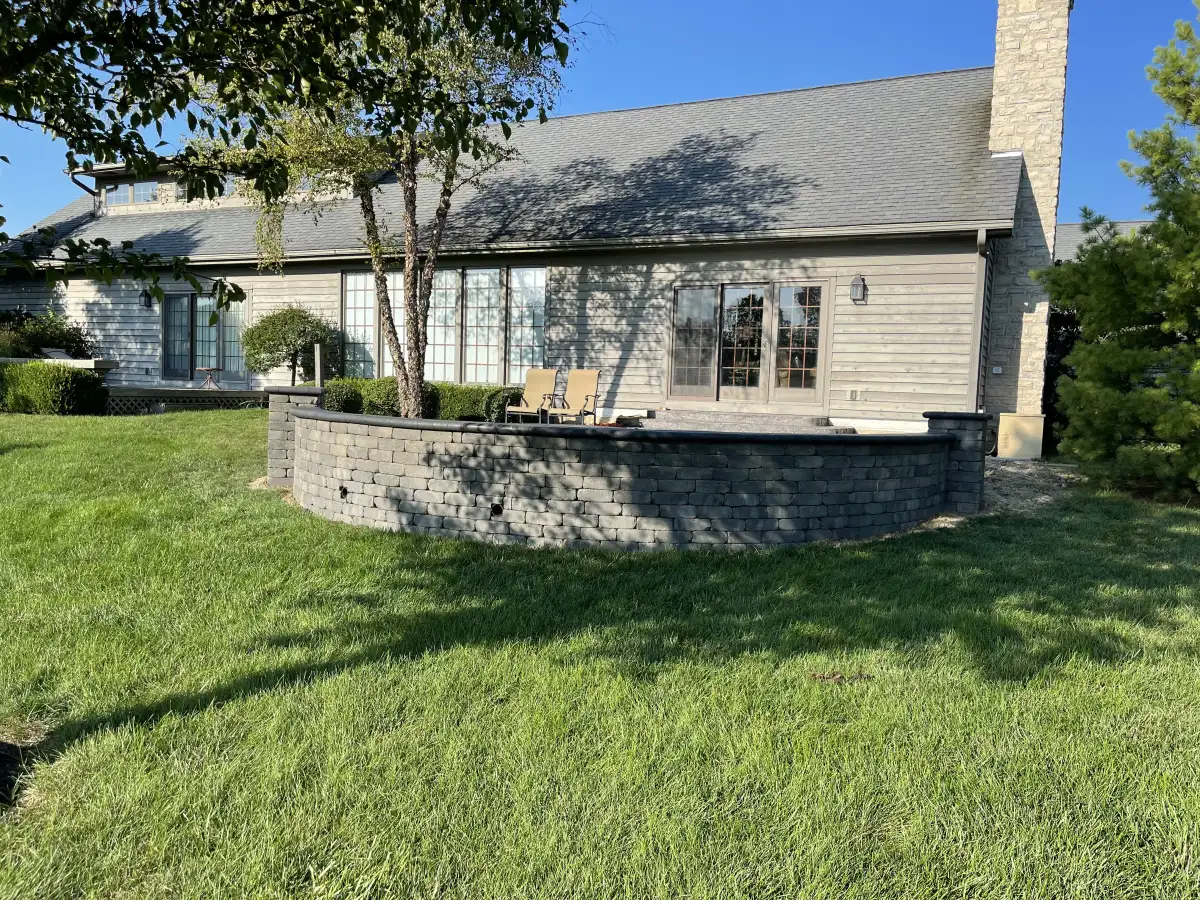
Hardscaping gives a Bellefontaine property structure that plants and mulch alone cannot provide. A patio, retaining wall, walkway, fire pit area, seating wall, or outdoor living space needs the right base preparation, drainage, access, and connection to nearby landscaping so it performs through Central Ohio rain, heat, and freeze-thaw cycles.
Raileys Services LLC provides hardscaping, landscape installs, grading, drainage support, maintenance, mowing, and snow removal across Central Ohio, including Bellefontaine. These are the questions homeowners should answer before booking so the estimate covers the real conditions around the work area.
What should the hardscape do for the property?
Function should come before material choices. A patio for grilling needs different planning than a dining patio, a small fire pit space, a walkway from the driveway, or a retaining wall that makes a slope usable. Start by deciding whether the project should create more usable space, control erosion, reduce muddy traffic, define an outdoor room, or improve curb appeal.
Once the purpose is clear, the rest of the plan becomes easier to evaluate: size, shape, access, seating, door transitions, grade changes, privacy, lighting, and how the hardscape should meet the lawn or planting beds.
How will water move around the finished surface?
Drainage is one of the most important hardscaping questions in Bellefontaine. Water should move away from the house, finished pavers, walkways, walls, and nearby beds. If runoff already crosses the future work area or collects in a low spot, the project may need grading or drainage correction before visible hardscape installation begins.
Watch the area after a heavy rain. Look for standing water, soggy turf, washed mulch, erosion marks, downspout discharge, or water moving toward the foundation. Raileys Services can coordinate grading and drainage solutions with the hardscape so the finished work is not fighting the site.
Should grading and seeding happen before or after hardscaping?
Resolve major grade and runoff problems before the finished patio, walkway, or wall goes in. The hardscape base and drainage path need stable elevations, and reshaping the yard afterward can disturb finished edges or send water back toward the new feature. Once the hardscape is set and final elevations are confirmed, disturbed soil can be prepared and seeded so the lawn meets the new surface cleanly.
The exact order depends on how much soil must move, where equipment can enter, and whether a drain or outlet crosses the work area. Ask the estimate to separate base preparation, broader yard grading, drainage work, and lawn restoration so you can see how the pieces fit together.
If your Marysville property needs a rough or poorly draining yard corrected rather than a patio or wall, start with Raileys’ grading, drainage, and seeding service in Marysville. For a patio, walkway, retaining wall, or fire pit, continue with the hardscaping service. This keeps the estimate focused on the work you actually need.
What base preparation is included?
The base is what determines whether a patio, walkway, or wall stays stable. Paver areas need excavation, compacted aggregate, bedding material, edge restraint, correct pitch, and joint material. Retaining walls need stable base work, drainage stone, compacted backfill, and water relief behind the wall.
When reviewing an estimate, ask what is included below the finished surface. Square footage alone does not tell the full story. A durable hardscape in Central Ohio needs preparation that accounts for rain, clay-heavy soil, and freeze-thaw movement.
Central Ohio freeze-thaw cycles make water and preparation especially important. Water expands when it freezes, so repeated freezing and thawing can contribute to movement when moisture remains beneath or beside a hardscape. Ask the contractor to explain how the planned preparation, drainage, and edges work together at your property.
Can equipment and materials reach the work area?
Access affects cost, timing, and the way the job is staged. A backyard with a narrow gate, steep side yard, fence, mature landscaping, septic area, or soft lawn may need different planning than an open work area. Materials have to come in, excavated soil may need to leave, and the crew needs room to work without damaging finished areas.
Before requesting an estimate, take photos from the driveway to the work area. Include gates, slopes, steps, tight corners, nearby utilities, irrigation, downspouts, and any areas that need extra care during construction.
Should landscaping be planned with the hardscape?
Most hardscapes look better when planting beds, lawn edges, mulch, grading, and maintenance are discussed early. A patio may need privacy plantings. A walkway may need clean bed lines. A retaining wall may need grading, seeding, and shrubs after installation.
If landscaping is postponed, the hardscape should still leave space for it. Plan future landscape installs in Bellefontaine around the same bed lines, access points, and drainage routes, and consider the planting, grading, and maintenance questions before the hardscape layout is finalized.
When should hardscaping be scheduled?
Hardscaping is commonly planned from spring through fall in Central Ohio, but the right schedule depends on weather, soil moisture, access, material availability, and the related work needed around the feature. Saturated ground can slow excavation and compaction. Freeze-thaw conditions can affect timing. Larger projects need more lead time, especially when grading, drainage, and landscape installation are connected.
If the goal is to use a patio during summer, start the conversation before peak season. If the hardscape is tied to erosion, slope problems, or standing water, earlier planning can keep the issue from getting worse through another heavy-rain season.
What details help with a hardscaping estimate?
Helpful details include the Bellefontaine property address, photos of the work area, the type of feature you want, rough dimensions if available, gate or driveway constraints, known drainage or slope concerns, and whether the project should connect with planting, mulch, grading, drainage, mowing, or future maintenance.
Raileys Services handles hardscaping for Bellefontaine properties. When you are ready for an estimate, share your hardscape goals, photos, rough dimensions, access details, and any water or slope concerns.
Which material fits the way you will use the space?
Appearance matters, but so do traction, heat, texture, stain exposure, edge details, repair options, and routine upkeep. A patio near a grill may face different wear than a front walk. Steps and sloped paths need comfortable transitions. A retaining wall material should fit the scale and purpose of the wall, not only the color of the house.
Ask to compare materials within the full installed plan. The right conversation includes how each option will be cut and finished, how it meets the lawn or beds, and what care will help it stay clean over time.
What site conditions could change the plan?
Soil, slope, existing concrete, buried utilities, tree roots, downspouts, septic components, and nearby foundations can all affect placement or preparation. A low area may need a different elevation. A steep route may need steps rather than a continuous walk. An existing slab may need removal rather than being treated as a ready-made base.
Point out anything you know about the property, including areas that stay soft, settle, wash out, or have been repaired before. Conditions that are easy to miss during dry weather may be obvious in photos taken after a storm.
Why do hardscaping estimates vary so much?
Size and material matter, but they are only the visible part of the estimate. Existing concrete or structures may need removal. Soil and slope affect excavation. A stable base, finished pitch, edge restraint, wall drainage, and transitions into the lawn or beds all take labor and materials. Tight gates, steep approaches, or a long route from the street can also change how equipment and materials reach the work area.
Ask each contractor to separate the major parts of the scope: removal, excavation, preparation, drainage, surface or wall materials, access assumptions, cleanup, and restoration. A written breakdown makes it easier to understand whether a lower total reflects a different material choice, a simpler site, or work that is not included.
What is the least expensive hardscaping option?
There is no single material or feature that is always the least expensive after installation. A small, straightforward area with easy access may cost less than a larger project, but the site still needs suitable preparation. A lower-priced surface does not automatically produce the lowest total if demolition, drainage, a grade change, or extensive restoration is required.
Compare options around how the space will be used, expected upkeep, repairability, and the complete installed scope. If budget is the constraint, ask which changes reduce complexity without removing the work the project needs to function. Adjusting the footprint, shape, border details, phases, or connected landscape work may be more useful than choosing a surface on price alone.
Is fall the best time to schedule hardscaping?
Fall may work for some projects, but it should not be treated as an automatic discount season. Ground and weather conditions, the type of feature, material availability, contractor scheduling, and connected planting or lawn work all matter. A project that is ready to build is different from one that still needs design decisions, utility coordination, drainage planning, or permits confirmed.
Ask what needs to be decided before scheduling and how weather could affect the sequence. If the hardscape will connect to new beds or repaired turf, plan those steps together even if they happen in separate phases. A coordinated schedule helps protect finished elevations and avoids reopening an area for work that could have been anticipated.
What maintenance should you expect after installation?
Ask for care guidance that matches the selected material and joint system. Useful topics include cleaning, stain response, weed control, joint material, sealing when applicable, snow and ice practices, and signs of movement. Do not assume every paver, brick, concrete, or wall system has the same maintenance routine.
Watch for rocking units, spreading joints, low spots that hold water, cracking, leaning, soil washing out beside edges, or a wall that is changing shape. Early changes may point to a local repair or a water issue; waiting can allow a small problem to affect a larger area.
What should be clear before you approve the project?
Confirm the feature dimensions, layout, materials, demolition, excavation, base or wall preparation, drainage details, edge treatment, access route, cleanup, and surrounding restoration. Ask who handles utility locating or permit questions when applicable, how changes are approved, and which selections must be final before materials are ordered.
Also confirm what is not included. Planting, grading, seeding, lighting, downspout changes, furniture, or future phases should not be assumed unless the written scope names them.
Who confirms permits, utilities, easements, and neighborhood rules?
Requirements depend on the specific property and project. Confirm who will check applicable City of Bellefontaine requirements, utility locating, easements, and any neighborhood or association rules before work begins. A wall, grade change, utility conflict, or drainage connection can raise different questions than a simple ground-level feature.
For broader local service information, visit the Bellefontaine service area page. It connects hardscaping with the landscaping, grading, drainage, mowing, seasonal cleanup, and snow services available to local properties.
What are the tradeoffs of adding more hardscape?
Hardscape can create a stable route, define outdoor rooms, and make a sloped or muddy part of the yard more useful. It also replaces planted or permeable ground, can redirect water, and requires an upfront construction investment. Even durable materials need cleaning and occasional joint, edge, or surface attention.
The goal is not always the largest possible paved area. A balanced layout may combine a right-sized patio or path with lawn, planting beds, or other landscape features. Compare the usable area you gain with drainage, maintenance, summer exposure, snow handling, and how much green space you want to keep. Raileys Services also provides landscaping when the surrounding beds and lawn need to be planned with the hardscape.
Common booking questions
Does every patio need drainage planning?
Yes. Even a simple patio needs correct pitch and base preparation. Larger areas, work near the house, and sites with existing runoff may need more detailed drainage planning.
Should grading and seeding happen before or after hardscaping?
Correct major slope or runoff problems before the finished hardscape is installed. After final elevations and hardscape edges are set, disturbed soil can be prepared and seeded. The exact sequence depends on access, drainage needs, and how much of the yard must be reshaped.
Can a retaining wall be decorative?
Yes, but decorative walls still need proper base work and drainage. Functional walls that hold back soil usually need additional planning around height, pressure, water, and nearby structures.
Can hardscaping and landscaping be phased?
Often, yes. The important part is planning the final layout early so the first phase leaves room for future beds, walkways, trees, seating, or maintenance access.
How do I request a Bellefontaine hardscaping estimate?
Call (937) 243-9488 or use the contact page. Include your address, photos, the feature you are considering, access details, and any water or slope issues you already know about.
Ready to plan hardscaping in Bellefontaine?
If you are considering a patio, retaining wall, walkway, fire pit area, or hardscape that should connect with new landscaping, Raileys Services LLC can review the site conditions and recommend a practical scope. Request a free estimate through the contact form or call (937) 243-9488.