
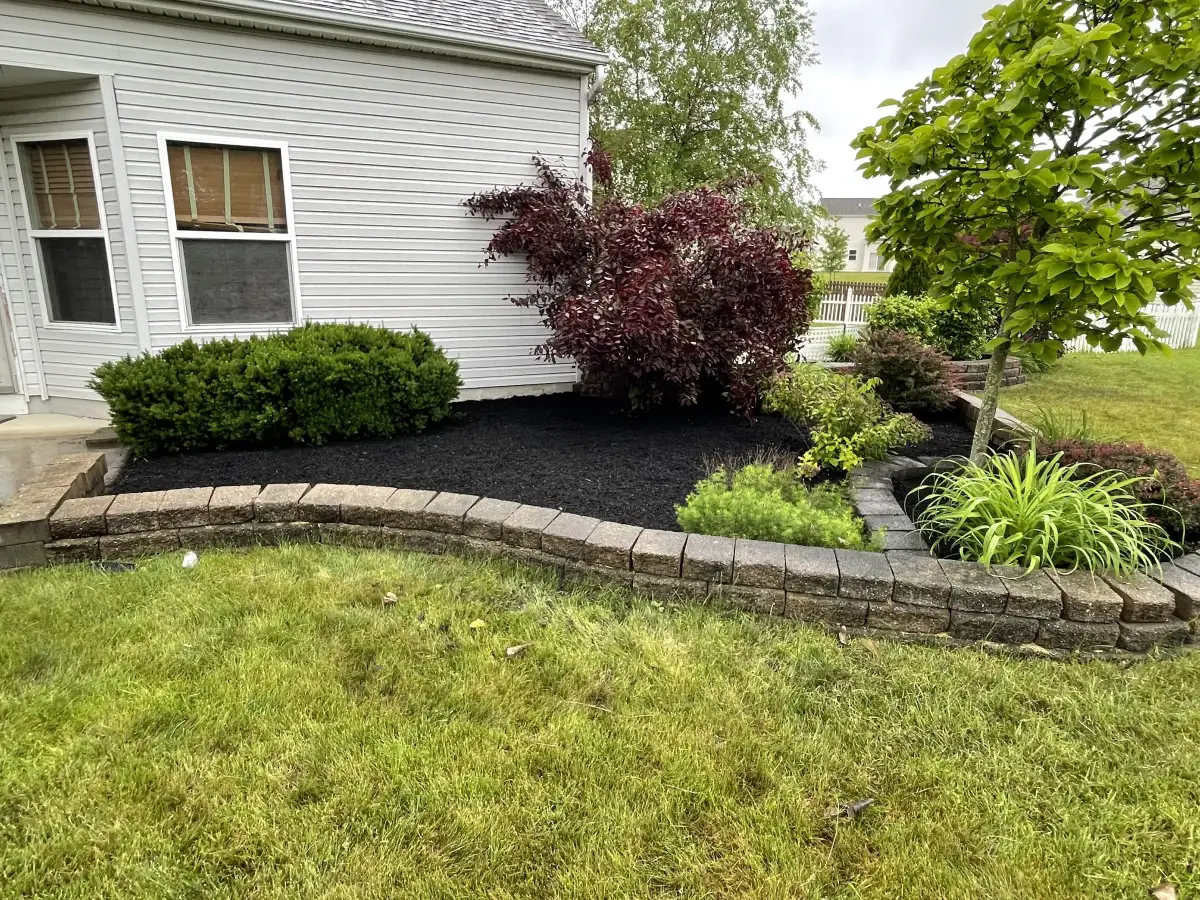
The cost of mulching is not just the price printed beside a bag or a cubic yard of material. For an installed project, the total also depends on how much area needs coverage, how the beds must be prepared, whether old material needs attention, how easily mulch can reach the work area, and what cleanup is included.
That is why a reliable Bellefontaine mulching estimate starts with the property rather than a one-size-fits-all number. This guide shows how to estimate quantity and compare scope so you can understand what you are paying for. If you are ready for a property-specific quote, Raileys Services offers professional mulching throughout its Central Ohio service area.
The short answer: installed mulching cost is shaped by mulch quantity and type, delivery, bed preparation, edging, installation labor, access, cleanup, and any removal or thinning of excess old material. Compare those details in writing before comparing totals.
Start with the amount of mulch your beds need
Mulch is commonly measured by the cubic yard. To estimate volume, measure the square footage of the beds, multiply by the planned depth in inches, and divide by 324:
Square feet × depth in inches ÷ 324 = cubic yards of mulch
For example, 540 square feet covered at 3 inches requires 5 cubic yards. The same area at 2 inches requires about 3.3 cubic yards. Irregular curves and tree rings make measurement less exact, but the formula gives you a useful starting point.
One cubic yard covers approximately:
- 162 square feet at 2 inches deep
- 108 square feet at 3 inches deep
- 81 square feet at 4 inches deep
More is not automatically better. Existing mulch may already provide part of the needed depth, and repeatedly adding thick layers can cause matting or hold moisture against stems and trunks. The right quantity depends on what is already in the bed, not only its square footage.
Seven factors that affect installed mulching cost
1. Total bed area and finished depth
More cubic yards mean more material to buy, deliver, move, and spread. A touch-up over an existing bed and a first application over a newly prepared area may have very different quantity and labor needs even when their footprints match.
2. Mulch material
Natural hardwood, dyed brown or black products, cedar, and materials intended for play areas are not interchangeable. Product pricing and availability can change, so the estimate should identify the mulch being quoted instead of using the word “mulch” alone. Color, texture, intended use, and maintenance preferences all belong in the decision.
3. Bed preparation
A clean installation may involve removing leaves and debris, addressing visible weeds, cutting back encroaching grass, and preparing the surface before mulch is spread. A bed that is ready for material will take less preparation than one with dense weeds, buried edging, or neglected growth.
4. Edging and bed-line changes
Refreshing a clear existing edge is different from redefining a long curved border or changing the shape of the bed. Ask whether edging is included and whether the quote covers only cleanup of the current line or creation of a new one.
5. Old mulch and excess depth
Old organic mulch often breaks down in place, so complete removal is not part of every refresh. However, a thick, matted, contaminated, or badly piled layer may need to be loosened, thinned, or removed. That creates additional handling and possible disposal work. Mulch touching tree trunks or plant stems should also be pulled back rather than covered with another layer.
6. Delivery and access
Distance from the delivery point to the beds matters. Gates, steps, narrow side yards, steep slopes, soft lawn, fenced areas, and beds far from the driveway can increase the time needed to move material without damaging the property. Tell the estimator where material can be staged and point out surfaces or utilities that need protection.
7. Cleanup and connected work
Confirm whether the estimate includes blowing or sweeping hard surfaces, removing packaging or debris, and leaving bed edges finished. Seasonal cleanup, pruning, planting, weed treatment, or a larger landscape maintenance visit may be separate unless clearly listed.
How to compare two mulching estimates
A lower total can reflect a lower price, a smaller quantity, or a thinner scope. Before choosing, compare the same questions:
- How many cubic yards are included, and at what intended depth?
- Which mulch product and color are specified?
- Are delivery and movement to the beds included?
- What weed, debris, grass, and bed preparation will be completed?
- Is edging included, and does it follow the current bed line?
- Will excess old mulch be thinned or removed if needed?
- What cleanup and disposal are included?
- Are any related services listed separately?
When these details match, the totals are easier to evaluate. When they do not, ask the contractor to clarify the scope before assuming one quote offers the same result for less.
Bagged mulch versus bulk mulch
Bagged mulch can be convenient for a small bed, easy to transport in limited quantities, and simple to store before use. Bulk mulch may make more sense when several beds require multiple cubic yards. The better value depends on total volume, product, delivery, handling, installation time, and what happens to any leftover material.
Convert both options to the same volume before comparing them. Bag size varies, so do not compare a per-bag price with a per-yard price without checking how many bags equal the required cubic yards.
Does the time of year change the cost?
Material pricing, availability, scheduling, weather, and bed conditions can change during the season, but there is no dependable rule that one month will always be cheapest. Ask for a current written estimate and schedule around when the bed can be properly prepared.
For timing, depth, and application guidance, read the spring mulching guide for Central Ohio. That article focuses on when and how to mulch; this one focuses on how quantity and scope affect cost.
Landscape mulching is not forestry mulching
Search results sometimes mix these two services, but their costs cannot be compared. Landscape mulching places selected material in planting beds or around trees. Forestry mulching uses heavy equipment to clear and process brush, saplings, or other vegetation across a larger site. This guide covers landscape-bed mulching, the service Raileys provides.
Mulching cost FAQs
How is the cost of professional mulching calculated?
A professional estimate generally reflects the amount and type of mulch, delivery, bed preparation, edging, installation labor, site access, cleanup, and any removal or correction of excess old material included in the agreed scope.
How much area does one cubic yard of mulch cover?
One cubic yard covers about 162 square feet at 2 inches deep, 108 square feet at 3 inches deep, or 81 square feet at 4 inches deep. Check the existing mulch depth and bed conditions before deciding how much new material to add.
Why can two mulching estimates be different?
Two estimates may include different material quantities, mulch products, bed preparation, edging, weed removal, delivery, disposal, access assumptions, or cleanup. Compare written scope and quantity rather than total price alone.
Is bagged mulch cheaper than bulk mulch?
Not always. Bagged mulch can be convenient for a small area, while bulk mulch may suit larger beds. Compare the same total volume and include delivery, handling, installation, and leftover material when evaluating the full cost.
Is landscape mulching the same as forestry mulching?
No. Landscape mulching places a selected material in planting beds or around trees. Forestry mulching uses heavy equipment to clear and process brush or vegetation. They are different services with different estimating methods.
Does Raileys Services provide mulching in Bellefontaine, Ohio?
Yes. Bellefontaine is within the Raileys Services LLC service area. Homeowners and businesses can request an estimate for mulching and discuss related bed preparation, seasonal cleanup, landscape maintenance, or installation needs.
Get a clear mulching estimate for your property
Raileys Services LLC can review your bed areas, existing mulch, access, edging, preparation, and material preferences before defining the work. Request a free estimate through the contact page or call (937) 243-9488.