
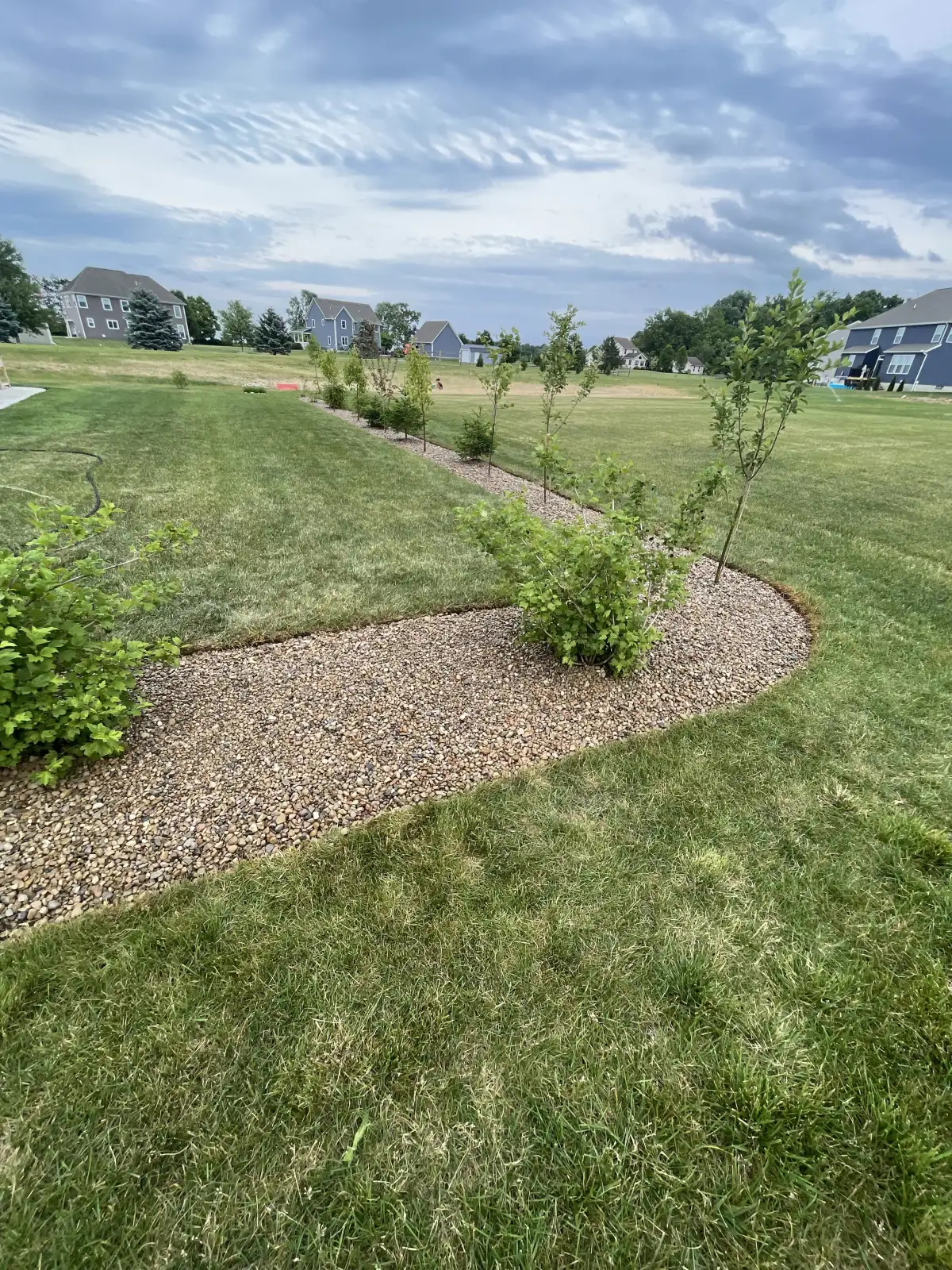
A landscape install can mean a focused front-bed refresh, new trees and shrubs, a privacy planting, or a larger update coordinated with grading and hardscaping. Those projects should not be compared by plant count alone. The useful questions are about what the property needs, what preparation is included, and how the finished beds will function after the first growing season.
Raileys Services LLC provides landscape installs across Central Ohio, including landscape installation in Bellefontaine. Before requesting an estimate, use the seven questions below to define the result you want and understand what each proposal actually covers.
Bring to the first conversation: the property address, photos from several angles, the area you want changed, any standing-water or slope concerns, access limits, preferred timing, and future patio or walkway ideas. You do not need a finished design to start.
1. What problem should the landscape install solve?
Start with the outcome, not a shopping list. You may want a cleaner front entry, more separation from a neighboring property, fewer overgrown shrubs, planting around a new patio, or beds that are easier to maintain. Two projects with the same number of plants can require very different layouts and preparation because they are solving different problems.
Rank your priorities before the estimate. Decide which view matters most, what needs to stay, where people and mowers move, and how much regular bed work feels realistic. That gives the installer a better target than a request for “new landscaping” around the entire house.
2. Which site conditions need attention before plants are chosen?
Sun exposure, existing soil, slope, downspouts, low spots, utilities, tree roots, windows, walkways, and equipment access all shape the plan. On Bellefontaine properties, areas that collect runoff or remain soft after rain deserve attention before new soil, mulch, and roots cover the evidence.
Walk the proposed beds at different times of day and after a storm. If you see standing water, washouts, concentrated downspout flow, or an unfavorable slope, discuss drainage solutions or grading first. It is easier to coordinate water movement before finished beds are in place.
3. What should a landscape installation estimate include?
A useful estimate makes the scope visible. Look for the areas being changed, removals, bed preparation, plant selections or allowances, plant sizes, quantities, mulch or other finish material, delivery, cleanup, and restoration around the work area. If edging, pruning, transplanting, disposal, watering setup, or lawn repair matters to you, confirm whether it is included.
Ask how changes are handled if the plan or material selection shifts. Also ask which responsibilities begin after installation, such as watering and ongoing care. Clear inclusions and exclusions make two proposals easier to compare than a total price by itself.
4. Is an hourly rate the right way to compare landscape work?
An hourly number—even a specific figure such as $100 per hour—does not say whether the price is reasonable. It leaves out crew size, equipment, delivery, plant and material costs, removal, bed preparation, disposal, cleanup, and the amount of work completed in that hour.
Compare the written scope, materials, quantities, responsibilities, and finished result instead. A lower hourly rate can still produce a higher total if the proposal covers fewer materials or requires more time. A fixed project total is also difficult to judge when one estimate includes preparation and restoration that another omits.
5. What does the “rule of three” mean in a planting plan?
The rule of three is a visual guideline, not a requirement. Designers often repeat plants in groups or arrange layers in odd numbers because repetition can create rhythm and make a bed feel intentional. The idea can be useful for foundation beds and entry plantings, but it should never override what fits the property.
Mature size, sunlight, water needs, visibility from windows and walks, and maintenance all matter more than hitting a number. Three shrubs placed too close to the house will still become a problem. Ask how the arrangement should look as plants grow, not only how full it will appear on installation day.
6. How much maintenance will the finished landscape require?
The install budget and the care budget are related. A layered bed with flowering perennials and ornamental grasses may need more seasonal cutting, dividing, weeding, and cleanup than a restrained shrub grouping. Fast-growing plants can fill space quickly but may also need more pruning. Narrow beds can make mature plant spacing harder to manage.
Ask about watering during establishment, expected pruning, mulch refreshes, weed control, seasonal cleanup, and the likely size of each plant. If you want professional upkeep, review landscape maintenance and mulching as separate scopes rather than assuming they are part of installation.
7. Which common landscape installation mistakes can planning prevent?
Common problems begin when the visible finish is planned without the working property. Examples include beds that interrupt mower access, plants that outgrow windows or walkways, mulch placed where runoff carries it away, hardscape added later at conflicting elevations, and a first phase that blocks equipment from reaching the next one.
A whole-property plan can still be completed in phases. Identify the fixed elements first—doors, walks, patios, drainage routes, utilities, grade changes, and access—then decide which beds should be built now. If a future patio, walkway, or retaining wall is possible, mention it before planting locations are finalized.
Landscape install FAQs for Bellefontaine homeowners
What should I send before requesting a landscape install estimate?
Send the property address, photos from several angles, the area you want changed, the main problem or goal, any standing-water or slope concerns, access limitations, your preferred timing, and whether the project may connect to future patios or walkways.
Is an hourly rate enough to compare landscape installation estimates?
No. An hourly rate does not show crew size, equipment, materials, plant sizes, bed preparation, removal, delivery, cleanup, or restoration. Compare the complete written scope and the finished result each estimate covers.
What is the rule of three in landscaping?
The rule of three is a design guideline that uses repeated groups or layers to create rhythm and a more intentional planting composition. It is not a requirement, and mature plant size, sunlight, drainage, visibility, and maintenance still determine whether a grouping fits the site.
Should drainage or grading be reviewed before new beds are installed?
Yes when the proposed area has standing water, washouts, soft ground, concentrated downspout flow, or an unfavorable slope. Reviewing water movement first can prevent new soil, mulch, and plants from being placed where drainage work may later disturb them.
Does Raileys Services provide landscape installs in Bellefontaine, Ohio?
Yes. Bellefontaine is within the Raileys Services LLC service area. Homeowners can request an estimate for landscape installs and related landscape maintenance, mulching, grading, drainage, or hardscaping needs.
How do I request a Bellefontaine landscape install estimate?
Call Raileys Services LLC at (937) 243-9488 or use the contact form. Share the property address, photos of the area, the result you want, known water or access concerns, and your preferred timing.
Start with a clear Bellefontaine landscape scope
Raileys Services can review the property and help define a practical scope for new beds, trees, shrubs, mulch, and connected grading, drainage, or hardscape work. Request a free estimate or call (937) 243-9488 to discuss your Bellefontaine property.