
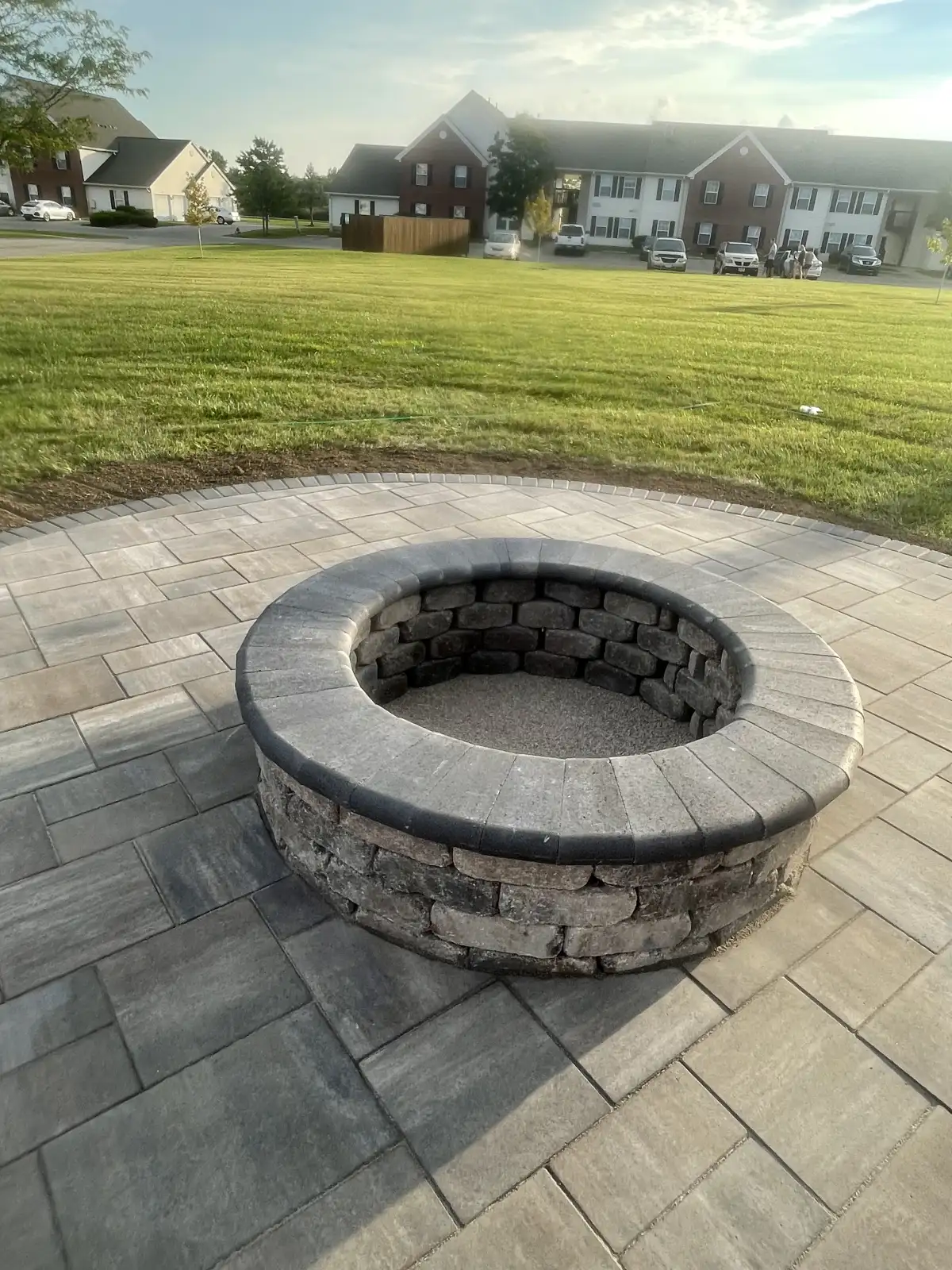
Hardscaping looks permanent because it is. That makes the decisions before installation more important than choosing a color from a sample board. A patio, walkway, retaining wall, or fire pit area must fit how you use the yard, meet existing grades, handle water, and connect cleanly with lawn and planting beds.
Bellefontaine homeowners comparing hardscaping services should ask questions that reveal what each proposal actually includes. The most useful answers connect the finished surface to preparation, access, drainage, restoration, and long-term care. This guide organizes those decisions without assuming that one material or layout fits every property.
Bring the property into the conversation: note the approximate size, intended use, slope, low spots, downspouts, gates, steps, nearby utilities, and any future landscaping. Photos taken during or just after rain can help show water patterns that are easy to miss on a dry estimate day.
1. Are you solving the right outdoor-space problem?
Begin with the result you want, not the product you saw online. A dining patio needs enough clear space for chairs and circulation. A walkway should follow the route people naturally take. A retaining wall may hold back a grade, define a bed, or help turn a sloped area into more useful ground. A fire pit area needs a layout that accounts for seating and safe placement.
List what will use the space now and later: tables, grills, steps, gates, lawn equipment, planting beds, or a future shed. That helps establish dimensions and transitions before surface patterns are discussed. If a patio is the main goal, the custom patios service page outlines the types of outdoor living features Raileys Services builds.
2. What are the tradeoffs of adding more hardscape?
Hardscape can create a stable route, define outdoor rooms, and make a sloped or muddy part of the yard more useful. It also replaces planted or permeable ground, can redirect water, and requires an upfront construction investment. Even durable materials need cleaning and occasional joint, edge, or surface attention.
The goal is not always the largest possible paved area. A balanced layout may combine a right-sized patio or path with lawn, planting beds, or other landscape features. Compare the usable area you gain with drainage, maintenance, summer exposure, snow handling, and how much green space you want to keep. Raileys Services also provides landscaping when the surrounding beds and lawn need to be planned with the hardscape.
3. How will water move before, through, and after the project?
Water deserves a direct answer before finished elevations are set. Show where puddles form, where soil washes out, and where roof runoff enters the area. Ask how the planned pitch, wall drainage, joints, and transitions will move water away from doors, steps, foundations, beds, and lawn low spots.
The City of Bellefontaine explains that its storm water system carries runoff to local creeks and rivers, making responsible runoff management a community concern as well as a property concern. If the yard already has standing water, erosion, or a difficult slope, compare drainage solutions and grading before placing a finished surface over the problem area.
4. What work is planned beneath the visible material?
Finished pavers, block, or stone are only the top of a larger system. The proposal should explain the major steps appropriate to the feature and site: removal, excavation, subgrade review, base or wall preparation, drainage, compaction, edge support, joints, and finished pitch. The exact approach should respond to the soil, slope, loads, and material rather than being described as a one-size-fits-all recipe.
Central Ohio freeze-thaw cycles make water and preparation especially important. Water expands when it freezes, so repeated freezing and thawing can contribute to movement when moisture remains beneath or beside a hardscape. Ask the contractor to explain how the planned preparation, drainage, and edges work together at your property.
5. Which material makes sense beyond color and pattern?
Compare materials by how the space will be used, the look you want, the preparation each system requires, joint and edge details, cleaning needs, winter care, and how repairs would be handled. A surface that works well for a quiet patio may not be the best choice for a higher-load area or a grade transition.
Material price is only one part of the installed total. Demolition, excavation, base preparation, drainage, access, steps, walls, curves, borders, hauling, and lawn or bed restoration can remain substantial regardless of the surface selected. If a proposal is outside the budget, ask whether changing the footprint, layout, border, or project phases would preserve the main function more effectively than choosing on material price alone.
6. What explains the difference between two estimates?
A low total and a high total may be pricing different scopes. Compare the same details line by line: dimensions, removals, excavation, preparation, drainage, material and pattern, borders or edges, steps, wall details, access assumptions, disposal, cleanup, and surrounding restoration. The proposal should also state exclusions and describe how a change is approved if concealed conditions or a requested design change affects the work.
Ask which selections must be final before materials are ordered, whether the estimate depends on clear access, and who handles utility locating or any applicable permit, easement, or neighborhood requirements. Requirements vary by project and property, so avoid assuming that an approval needed for one wall or grade change applies to every ground-level patio.
7. Do timing and maintenance expectations fit your plans?
There is no universal “cheapest season” for hardscaping. Scheduling and pricing can depend on project scope, material availability, site conditions, and the contractor’s calendar. Ask about current availability and any weather-sensitive parts of the work instead of assuming that booking in fall automatically reduces the price.
Before selecting a material, ask what routine care it needs and which products or winter tools should be avoided. Debris removal, prompt stain response, weed control, and joint or surface care may apply depending on the installed system. After installation, persistent low spots, rocking units, widening joints, leaning, cracking, or soil washing away from an edge are signs worth addressing before the affected area grows.
Hardscaping FAQs for Bellefontaine homeowners
What should I ask before hiring a hardscaping contractor?
Ask what is included in the written scope, how the feature will fit the intended use, how water will be managed, what preparation is planned, which materials and edge details are specified, how the site will be accessed, what restoration is included, and how changes are approved.
What are the drawbacks of adding more hardscape?
Hardscape adds permanent usable structure, but it also reduces planted or permeable area, can redirect runoff, requires an upfront investment, and still needs cleaning or joint and surface care. A balanced plan should weigh those tradeoffs against how the space will be used.
How much does hardscaping cost in Bellefontaine, Ohio?
There is no single responsible price without a defined site and scope. Size, demolition, excavation, grade, drainage, access, base preparation, material, edge details, steps or walls, cleanup, and surrounding restoration can all affect the estimate.
Why do freeze-thaw cycles matter for hardscaping?
Water expands when it freezes. When water remains beneath or beside a hardscape, repeated freezing and thawing can contribute to movement. Site-specific base preparation, drainage, pitch, and edge support are therefore important parts of a Central Ohio plan.
Is fall always a cheaper time to book hardscaping?
No. Pricing and availability depend on the contractor, project scope, material availability, site conditions, and schedule. Ask for the current written estimate instead of assuming that a particular season automatically lowers the price.
Does Raileys Services provide hardscaping in Bellefontaine, Ohio?
Yes. Bellefontaine is within the Raileys Services LLC service area. Homeowners can request an estimate for paver patios, retaining walls, walkways, fire pit areas, and related grading, drainage, or landscape work.
Discuss your Bellefontaine hardscaping project
Raileys Services LLC can review the planned feature alongside the property’s use, access, grade, water movement, and surrounding landscape. Request a free estimate through the contact page or call (937) 243-9488.