
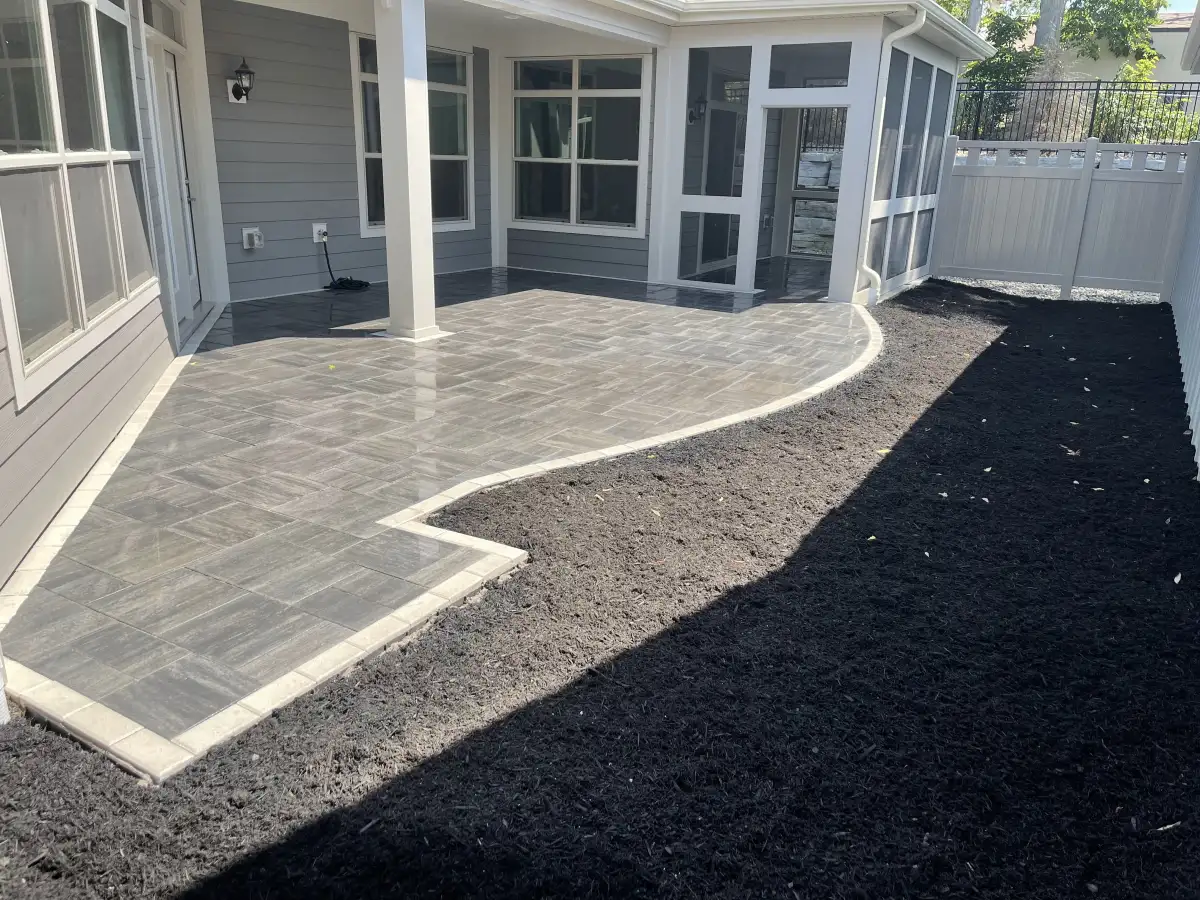
The best time to ask hardscaping questions is before a layout, material, and price are locked in. A patio, walkway, retaining wall, or fire pit area changes how people move through the yard, how rainwater crosses the property, and how lawn and planting beds meet permanent surfaces. Those connections are as important as the finish you see.
For a Bellefontaine homeowner, a useful first conversation should cover the intended use, slope and drainage, construction access, preparation, material choices, and what the written estimate includes. Raileys Services provides hardscaping services in Bellefontaine and can also coordinate related landscape, grading, and drainage needs.
Before the estimate: take photos after a steady rain, measure the approximate project area, note gates and access routes, and list the furniture, traffic, or grade change the finished space needs to handle.
1. What does the finished space need to do?
Start with use rather than material. A patio for a dining table needs room for chairs to move without dropping onto an edge. A walkway should connect the places people actually travel. A retaining wall may hold a grade, limit erosion, define a bed, or make a sloped area more usable. Each purpose leads to different dimensions, elevations, and edge conditions.
Think beyond the current season, too. Mention a future grill, fire pit, planting bed, fence, shed, or lawn route before the layout is finalized. If the main goal is an outdoor living area, compare the options on Raileys Services’ custom patios page.
2. Where does water move now—and where will it go afterward?
Hard surfaces can change how runoff moves. Show where puddles form, where soil washes out, and where downspouts discharge. Nearby doors, steps, foundations, slopes, and lawn low spots should be part of the discussion before finished elevations are set.
Bellefontaine maintains a public storm water management program, which is a useful reminder that runoff affects both individual properties and the larger drainage system. For property-specific work, ask how pitch, edges, wall drainage, and transitions will direct water. If standing water or erosion is already present, review drainage solutions before covering the area with a finished surface.
3. What preparation is included below the visible surface?
The finished material is only the top layer. Ask what will be removed, how the area will be excavated, what base or wall preparation is included, and how that preparation responds to the site. Ohio’s seasonal freeze-thaw conditions make stable preparation and water management especially important.
The answer will vary with the feature, material, soil, slope, and expected use. A contractor should be able to explain the major preparation steps in plain language without treating every property as identical.
4. Which material fits the use, upkeep, and repair plan?
Color and pattern matter, but they are not the whole decision. Compare materials by intended traffic, cleaning needs, joint or edge details, repair options, winter care, and how the surface will meet the home, lawn, and beds. Ask whether sealing is relevant for the selected system and what products or tools should be avoided.
When comparing price, look at the complete installed scope. A lower material price may not reduce demolition, excavation, drainage, access, or restoration costs. Adjusting the footprint or simplifying a border can sometimes change the budget more intelligently than choosing on surface price alone.
5. Can equipment and materials reach the project area?
Access affects how a project is built. Walk the route from the street to the work area and identify gate widths, fence panels, steep sections, septic components, utility boxes, overhead lines, tree roots, irrigation, and surfaces that need protection. Ask where removed material will travel and where new material can be staged.
Also discuss what happens to the access path when work is complete. Lawn repair, bed repair, grading, or seeding should be named in the estimate if they are included—not left as an assumption.
6. How can you compare two hardscaping estimates fairly?
Compare scope before comparing totals. The estimate should identify dimensions, materials, demolition, excavation, preparation, drainage, edge or wall details, access assumptions, cleanup, and restoration. It should also say what is excluded and how changes are approved.
Ask which decisions must be final before scheduling or material ordering. If one proposal includes drainage work and surrounding restoration while another does not, the totals are not measuring the same job.
7. What maintenance and warning signs should you expect?
Ask for care instructions that match the installed material and joint system. Routine needs may include debris removal, stain response, weed control, joint maintenance, or winter-use guidance. Maintenance expectations should be clear before the material is selected.
After installation, watch for rocking units, widening joints, persistent low spots, leaning, cracking, or soil washing away from an edge. These signs do not all point to the same cause, but they are worth addressing before movement or water affects a larger area.
8. Who confirms permits, utilities, easements, and neighborhood rules?
Requirements depend on the specific property and project. Confirm who will check applicable City of Bellefontaine requirements, utility locating, easements, and any neighborhood or association rules before work begins. A wall, grade change, utility conflict, or drainage connection can raise different questions than a simple ground-level feature.
For broader local service information, visit the Bellefontaine service area page. It connects hardscaping with the landscaping, grading, drainage, mowing, seasonal cleanup, and snow services available to local properties.
Hardscaping FAQs for Bellefontaine homeowners
What should a hardscaping estimate include?
The scope should identify the feature and dimensions, removal work, excavation, base or wall preparation, drainage, materials, edge details, access assumptions, cleanup, and restoration that are included. It should also make exclusions clear.
Why should drainage be discussed before a patio or walkway is installed?
A new hard surface and its finished elevation can change where water travels. Existing low spots, downspouts, slope, runoff paths, and nearby doors or foundations should be reviewed before the layout and pitch are set.
How should homeowners compare hardscaping materials?
Compare materials by intended use, appearance, installed preparation, maintenance, repair options, edge or joint details, and the complete project cost. The lowest material price does not always mean the lowest installed cost.
Do hardscaping projects in Bellefontaine require permits or other approvals?
Requirements depend on the project, property, utilities, and local rules. Before work begins, confirm any applicable City of Bellefontaine, utility, easement, or neighborhood requirements for the specific site and scope.
Does Raileys Services offer hardscaping in Bellefontaine, Ohio?
Yes. Bellefontaine is within the Raileys Services LLC service area. Homeowners can request an estimate for patios, walkways, retaining walls, fire pit areas, and connected grading, drainage, or landscape work.
Discuss your Bellefontaine hardscaping plans
Raileys Services LLC can review the project area and help define a practical scope around use, access, water movement, grade, materials, and surrounding landscape work. Request a free estimate through the contact page or call (937) 243-9488.