
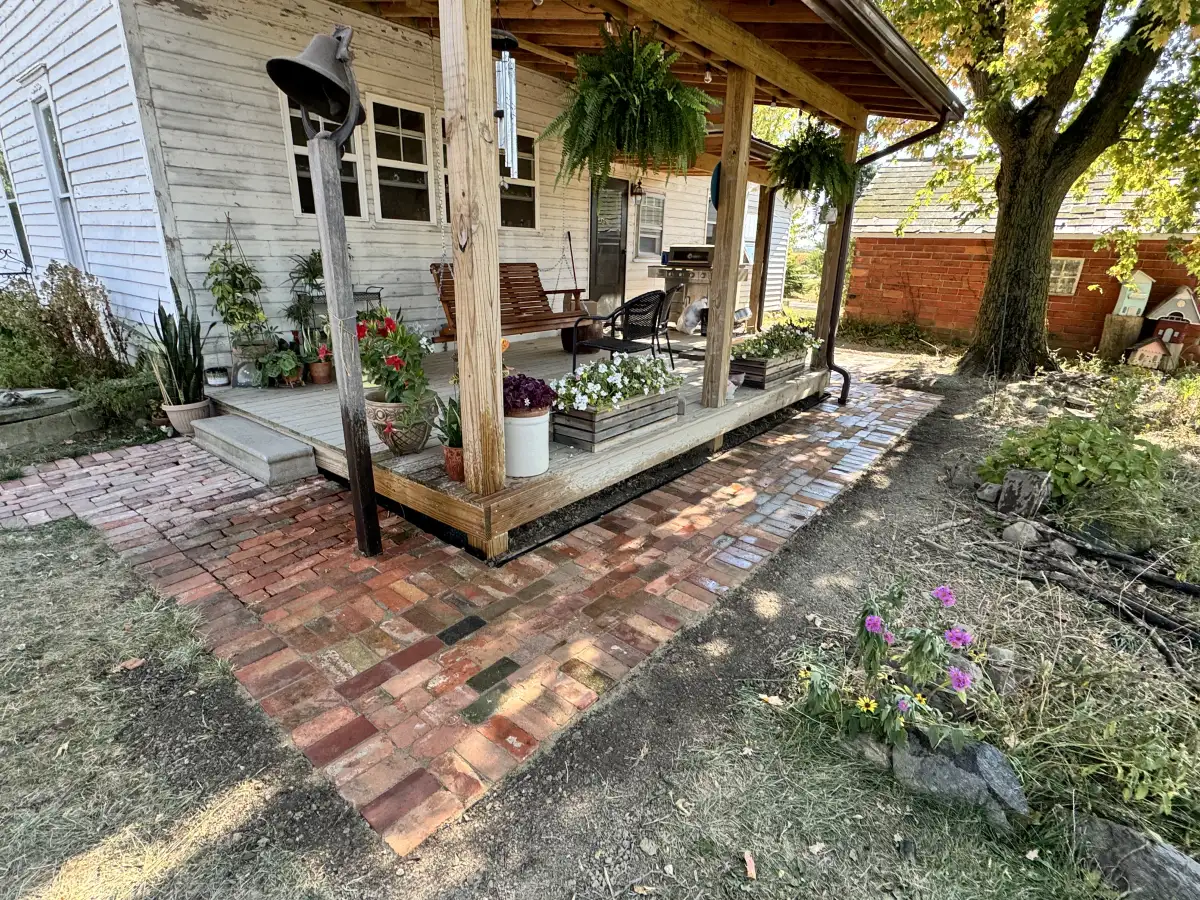
A hardscaping estimate can cover much more than the patio, walkway, wall, or fire pit area you see when the work is finished. Demolition, excavation, base preparation, drainage, access, edge details, cleanup, and repairs to surrounding lawn or beds can all change the scope. That is why two proposals with the same square footage may not describe the same project.
If you are considering hardscaping for a Bellefontaine property, the questions below will help you compare options without reducing the decision to a material name or an hourly rate. They build on the practical cost, maintenance, warning-sign, and seasonal questions homeowners are searching before they book.
Start with the result you need: identify who will use the space, what it needs to connect, the rough size, areas that stay wet or settle, access from the street, and any landscaping you may add later.
What are you actually booking?
“Hardscaping” can describe several different improvements. Raileys Services offers patios, retaining walls, walkways, and fire pit areas, but each solves a different property problem. A patio creates usable space. A walkway improves circulation. A retaining wall responds to a grade change. A fire pit area needs room for safe, comfortable seating and clear movement.
Define the feature and its daily job before discussing finishes. For a patio, count the furniture and circulation space you expect. For a walkway, identify every door, step, driveway edge, or yard area it should connect. For a wall, clarify whether the goal is to hold a grade, reduce erosion, define a bed, or make a slope easier to use. Homeowners focused on an outdoor gathering area can also review the custom patio service.
Why do hardscaping estimates vary so much?
Size and material matter, but they are only the visible part of the estimate. Existing concrete or structures may need removal. Soil and slope affect excavation. A stable base, finished pitch, edge restraint, wall drainage, and transitions into the lawn or beds all take labor and materials. Tight gates, steep approaches, or a long route from the street can also change how equipment and materials reach the work area.
Ask each contractor to separate the major parts of the scope: removal, excavation, preparation, drainage, surface or wall materials, access assumptions, cleanup, and restoration. A written breakdown makes it easier to understand whether a lower total reflects a different material choice, a simpler site, or work that is not included.
What is the least expensive hardscaping option?
There is no single material or feature that is always the least expensive after installation. A small, straightforward area with easy access may cost less than a larger project, but the site still needs suitable preparation. A lower-priced surface does not automatically produce the lowest total if demolition, drainage, a grade change, or extensive restoration is required.
Compare options around how the space will be used, expected upkeep, repairability, and the complete installed scope. If budget is the constraint, ask which changes reduce complexity without removing the work the project needs to function. Adjusting the footprint, shape, border details, phases, or connected landscape work may be more useful than choosing a surface on price alone.
What are the drawbacks of adding more hardscape?
Hardscaping creates permanent edges and elevations. Those choices affect runoff, doors and steps, lawn transitions, planting space, mower routes, and anything you may want to build later. More hard surface can also change where rainwater travels. Existing puddling, washout, downspout discharge, or soft areas should be discussed before the layout is finalized.
Maintenance does not disappear either. Depending on the material and design, homeowners may need to remove debris, clean stains, control weeds in joints, monitor settlement, or repair displaced pieces. If the site already has water problems, review drainage solutions before covering or redirecting the affected area.
Is fall the best time to schedule hardscaping?
Fall may work for some projects, but it should not be treated as an automatic discount season. Ground and weather conditions, the type of feature, material availability, contractor scheduling, and connected planting or lawn work all matter. A project that is ready to build is different from one that still needs design decisions, utility coordination, drainage planning, or permits confirmed.
Ask what needs to be decided before scheduling and how weather could affect the sequence. If the hardscape will connect to new beds or repaired turf, plan those steps together even if they happen in separate phases. A coordinated schedule helps protect finished elevations and avoids reopening an area for work that could have been anticipated.
What maintenance should you expect after installation?
Ask for care guidance that matches the selected material and joint system. Useful topics include cleaning, stain response, weed control, joint material, sealing when applicable, snow and ice practices, and signs of movement. Do not assume every paver, brick, concrete, or wall system has the same maintenance routine.
Watch for rocking units, spreading joints, low spots that hold water, cracking, leaning, soil washing out beside edges, or a wall that is changing shape. Early changes may point to a local repair or a water issue; waiting can allow a small problem to affect a larger area.
What should you point out during the estimate?
Show the contractor where water collects after rain, where the ground feels soft, and any spot that has settled or been repaired. Identify downspouts, utilities you know about, septic components, tree roots, gates, fences, overhead obstructions, and surfaces that need protection. Explain how deliveries can reach the site and where materials might be staged.
Bellefontaine properties do not all have the same slope or access. The Bellefontaine service area page outlines the broader landscaping, grading, drainage, mowing, seasonal, and hardscaping services available locally. The estimate should respond to the actual property rather than a city-wide assumption.
What should be clear before you approve the project?
Confirm the feature dimensions, layout, materials, demolition, excavation, base or wall preparation, drainage details, edge treatment, access route, cleanup, and surrounding restoration. Ask who handles utility locating or permit questions when applicable, how changes are approved, and which selections must be final before materials are ordered.
Also confirm what is not included. Planting, grading, seeding, lighting, downspout changes, furniture, or future phases should not be assumed unless the written scope names them. For more site-planning detail, read the earlier guide to seven hardscaping questions about function, base preparation, access, and water movement.
Hardscaping FAQs for Bellefontaine homeowners
How much does hardscaping cost in Bellefontaine, Ohio?
There is no single local price that fits every patio, wall, or walkway. Size, materials, demolition, excavation, base preparation, drainage, access, edge or wall details, and surrounding restoration all affect the estimate. Compare the written scope along with the total.
What is the least expensive hardscaping option?
The least expensive suitable option depends on the feature, site, access, expected use, and preparation required. A lower-cost surface does not always create the lowest installed project cost if the site needs significant excavation, drainage, or restoration.
What are the drawbacks of hardscaping?
Hardscaping creates fixed elevations and more hard surface, so drainage, transitions, access, repairs, and future landscape plans need to be considered early. Paver joints, stains, weeds, settling, and winter wear may also require maintenance over time.
Is fall the best time to book a hardscaping project?
Fall can be workable for some projects, but it is not automatically the lowest-cost or best season. Project type, ground and weather conditions, material availability, the contractor’s schedule, and any connected landscape work matter more than a general seasonal pricing assumption.
Does Raileys Services provide hardscaping in Bellefontaine, Ohio?
Yes. Bellefontaine is in the Raileys Services LLC service area. Homeowners can request an estimate for patios, retaining walls, walkways, fire pit areas, and related grading, drainage, or landscape work.
Plan your Bellefontaine hardscaping project
Raileys Services LLC can review the project area and help define a scope around the feature, access, water movement, surrounding landscape, and result you want. Contact Raileys Services for a free estimate or call (937) 243-9488.