
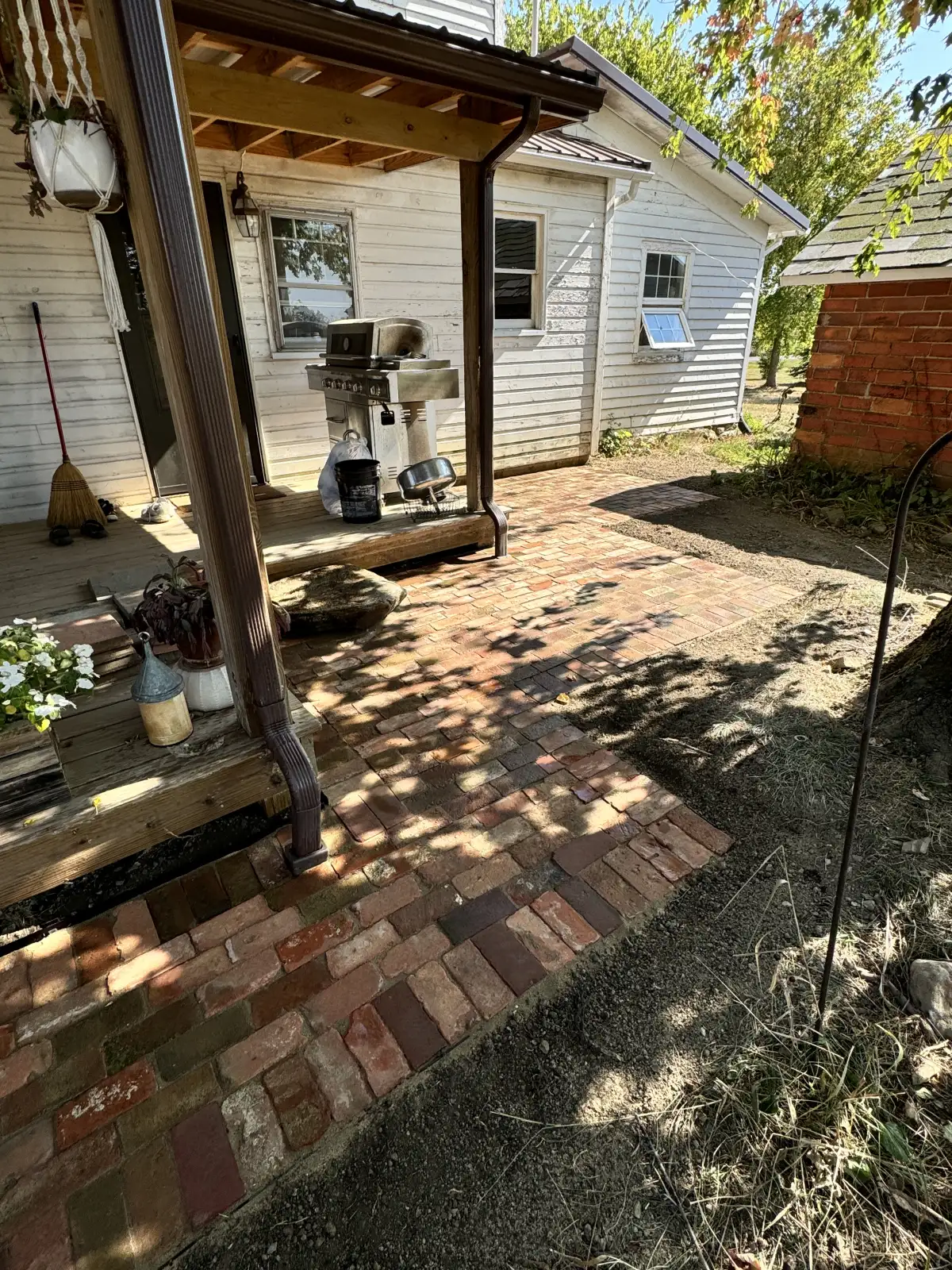
Patios and retaining walls are both hardscape features, but they solve different property needs. A patio creates level space for gathering and daily outdoor use. A retaining wall manages a grade change, holds soil, or creates a usable terrace. Many Bellefontaine yards can benefit from both, but the layout should begin with function rather than material color.
Raileys Services LLC provides hardscaping in Central Ohio and evaluates how a proposed feature will connect to the house, lawn, drainage, and surrounding landscape. That wider view helps avoid a patio that feels undersized or a wall that treats appearance without addressing the slope behind it.
Choose a patio when the goal is usable space
A patio is a strong fit when homeowners want a stable area for a table, grill, seating, or a clearer transition from an exterior door to the yard. Size should reflect the furniture and circulation, not an arbitrary square-foot target. Chairs need room to pull back, doors need clearance, and guests need a comfortable route around the seating area.
Location also affects comfort. Afternoon sun, roof runoff, nearby trees, privacy, and views from inside the house can make one area work better than another. The patio surface needs positive drainage, a durable base, and an edge that transitions cleanly into lawn or planting beds.
Choose a retaining wall when grade is the problem
A retaining wall can stabilize a slope, create a flatter planting or lawn area, support a patio edge, or replace a failing grade transition. The amount of soil being held, nearby loads, wall height, drainage, and property conditions all influence how the feature should be built.
Water behind a wall must have a planned path. Drainage stone, backfill, and an outlet keep pressure from building behind the finished face. When erosion or standing water is already visible, coordinate the wall with drainage and grading instead of treating it as a decorative border.
Use patios and walls together on sloped yards
On a property with changing elevation, a retaining wall can create the level area a patio needs. Steps or a walkway may then connect the patio to the lawn, driveway, or another outdoor zone. Planning these pieces as one composition gives each edge a purpose and reduces awkward leftover slopes.
The surrounding landscape installation should be considered at the same time. Planting can soften wall lines and add privacy, but mature roots, water needs, and maintenance access must fit the hardscape.
Measure the project against everyday use
Before an estimate, outline the approximate patio with marking paint, a garden hose, or temporary stakes. Place the expected furniture inside the area and walk the main routes. For a wall, photograph the slope after rain and note any erosion, soft ground, or water flowing toward the house.
Also identify gates, utilities, septic components, overhead branches, and delivery constraints. These details help Raileys Services evaluate whether equipment and materials can reach the work zone.
Patio and wall planning questions
Does every sloped yard need a retaining wall?
No. Gentle grades may be handled with grading or a different layout. A site review can determine whether a wall is useful, whether another solution fits, and how drainage affects the decision.
Can a retaining wall be added beside an existing patio?
Possibly. The existing elevations, base condition, drainage, and wall load all need review before the two features are connected.
How do I request a Bellefontaine hardscaping estimate?
Call (937) 243-9488 or request a free estimate online. Include the Bellefontaine address, photos, the feature you are considering, and how you want to use the finished area.