
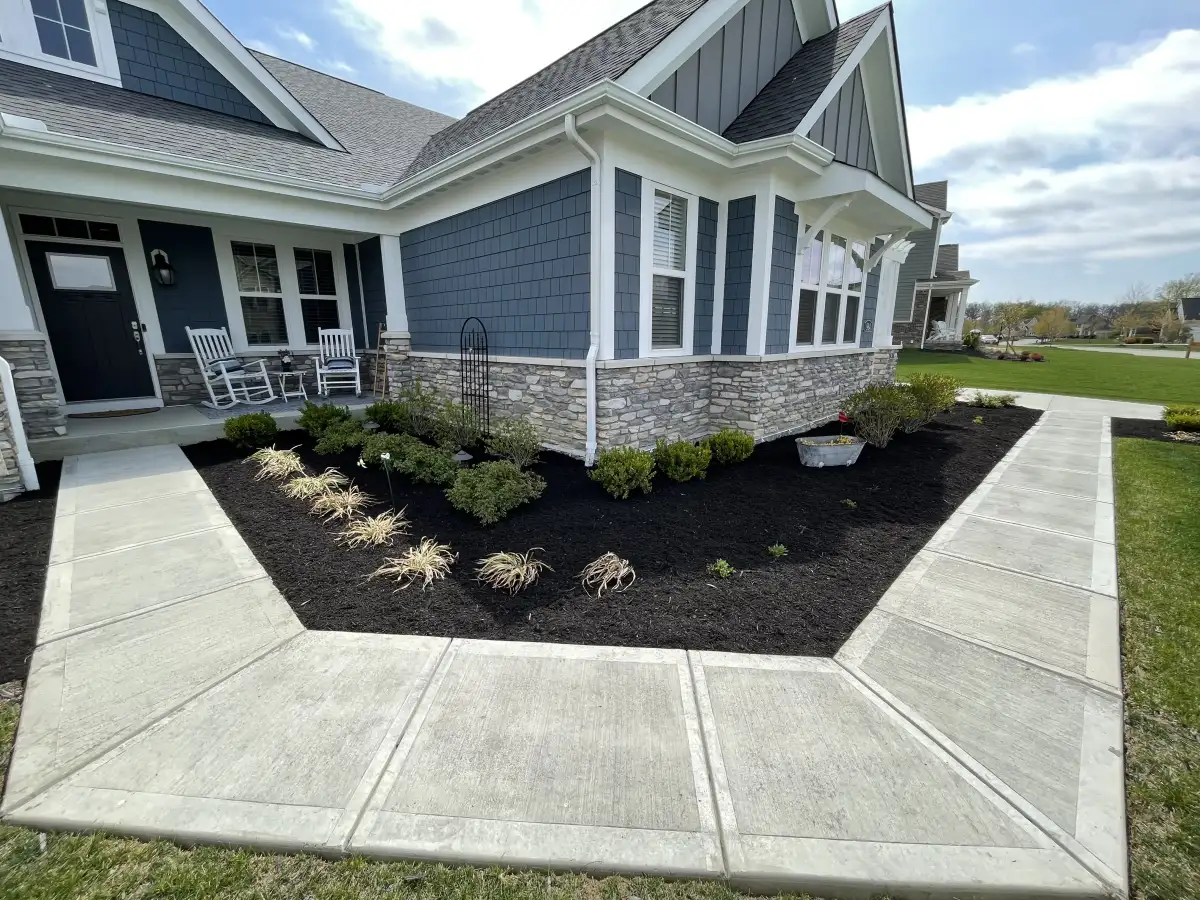
The best time to mulch in Central Ohio is late April through May, after the soil has thawed and spring cleanup is finished but before summer heat arrives. A fresh 2 to 3 inch layer of mulch suppresses weeds, locks in soil moisture, regulates root zone temperatures, and gives your landscape beds an immediate visual upgrade. Below is a complete guide to spring mulching for homeowners and property managers in Marysville, Union County, and the surrounding area.
At Raileys Services LLC, mulching is one of our most requested landscape maintenance services every spring. We have mulched hundreds of residential and commercial properties across Marysville, Dublin, Powell, Plain City, and Bellefontaine over the past decade. This guide reflects what actually works in our climate and soil conditions, not generic advice from a national gardening blog.
Why Mulching Matters in Central Ohio
Mulch does more than make your flower beds look neat. In our part of Ohio (USDA Hardiness Zone 5b to 6a), spring mulching serves four practical purposes that directly affect the health and appearance of your landscape throughout the growing season.
Weed Suppression
A properly applied layer of mulch blocks sunlight from reaching weed seeds in the soil, preventing most annual weeds from germinating in the first place. Without mulch, bare soil in landscape beds becomes a weed factory by mid-May. By the time you notice the problem, the weeds have already established root systems and are competing with your plants for water and nutrients. Mulch applied in late April catches the weed cycle before it starts.
Moisture Retention
Central Ohio summers bring stretches of heat and inconsistent rainfall, particularly in July and August. Mulch slows evaporation from the soil surface, keeping root zones moist longer between rains or irrigation cycles. This is especially important for newly planted trees, shrubs, and perennials that have not yet established deep root systems. A mulched bed can retain up to 70% more moisture than bare soil on a hot summer day.
Temperature Regulation
Ohio's spring weather is unpredictable. In the Marysville area it is not unusual to see 75-degree days in April followed by a frost warning the same week. Mulch acts as insulation for plant roots, buffering against temperature swings that can stress newly emerging perennials and shallow-rooted shrubs. In summer, mulch keeps soil cooler during heat waves, reducing root stress.
Soil Health
Organic mulches like hardwood and bark decompose slowly over the season, adding organic matter to the soil as they break down. This improves soil structure, feeds beneficial microorganisms, and gradually enriches the heavy clay soil that is common across Union County. Over several years of consistent mulching, you will notice your soil becoming looser, darker, and easier to work with.
When to Mulch in Ohio: Getting the Timing Right
Timing is one of the most common questions we get, and the answer is straightforward: late April through May is the ideal mulching window in Central Ohio.
Here is why that window works best:
- Too early (March to mid-April): The soil is still cold and may be waterlogged from snowmelt. Applying mulch now traps that cold moisture against plant crowns and can delay the warming that triggers spring growth. Perennials trying to push through a fresh layer of mulch can be smothered or misdirected.
- Just right (late April through May): The soil has warmed, perennials are emerging and visible (so you will not accidentally bury them), and spring cleanup is complete. Mulching now locks in the warming soil moisture heading into summer and catches early-season weed growth before it takes hold.
- Too late (June or later): Weeds have already germinated and established. You will spend more time pulling weeds before mulching, and the beds have already lost the moisture-retention benefit during the critical spring growth period. Mulching in June is still worthwhile, but you get more value from an April or May application.
For most properties in the Marysville area, we schedule mulching in late April and work through May. If your spring cleanup has already been completed, you are in the perfect position to mulch now.
Choosing the Right Mulch for Your Property
Not all mulch is created equal, and the right choice depends on your priorities, your budget, and where the mulch will be applied. Here are the most common options we install in Central Ohio and what each one does best.
Natural Hardwood Mulch
Hardwood mulch is the workhorse of Central Ohio landscaping. It is made from a mix of hardwood species (oak, maple, hickory) and breaks down at a moderate rate, enriching the soil as it decomposes. The natural brown-tan color blends well with most landscapes. Hardwood mulch holds in place reasonably well on flat beds and gentle slopes, though it can shift during heavy downpours. It costs approximately $45 to $55 per cubic yard installed in our area. This is the option we recommend most often for general landscape use.
Dyed Mulch (Brown or Black)
Dyed mulch is hardwood mulch treated with a vegetable-based colorant. The main advantage is appearance: it holds its rich brown or deep black color significantly longer than natural mulch, often maintaining its look well into fall. For homeowners who want their beds to look freshly mulched all season, dyed mulch is a strong choice. It costs slightly more at $50 to $65 per cubic yard installed. The colorant is safe for plants, pets, and children. Black mulch in particular creates a sharp contrast that makes green foliage and flowers stand out.
Cedar Mulch
Cedar mulch naturally resists insects and decay thanks to the oils in the wood. It has a pleasant scent that many homeowners enjoy, and it breaks down more slowly than standard hardwood, so it lasts longer between applications. The tradeoff is cost: cedar mulch runs $55 to $70 per cubic yard installed, making it the most expensive common option. We typically recommend cedar mulch for beds close to the house where insect resistance is a priority, or for clients who want to maximize the time between applications.
Playground Mulch
If you have a play area, swing set, or trampoline zone, certified playground mulch is the safest choice. It meets ASTM standards for fall height attenuation and provides cushioning that reduces injury risk. Playground mulch is not a landscaping product, it is a safety product, and it should not be substituted with regular mulch in areas where children play.
How Much Mulch Do You Need?
Most residential properties in Marysville need between 3 and 8 cubic yards of mulch. A cubic yard covers roughly 100 square feet at 3 inches deep. For reference, the average home with foundation beds, a few tree rings, and a small garden area typically needs 4 to 6 cubic yards. Larger properties with extensive beds, island plantings, and multiple tree rings can require 8 to 12 cubic yards. We measure and calculate exact volumes during our free on-site estimates so you know the cost before we start.
How to Apply Mulch Correctly
Proper application matters as much as the mulch itself. Incorrectly applied mulch can cause more problems than it solves. Here is the process we follow on every mulching job.
Step 1: Prepare the Beds
Before any mulch goes down, beds need to be clean. We pull visible weeds, trim back encroaching grass from bed edges, sharpen the edge line between turf and mulch, and remove any old debris. If the existing mulch layer has built up past 4 inches, we thin it first. Piling new mulch on top of old mulch year after year creates a thick, water-repellent mat that actually sheds water away from plant roots instead of letting it soak in.
Step 2: Apply 2 to 3 Inches Evenly
The target depth is 2 to 3 inches. Less than 2 inches will not suppress weeds effectively or retain moisture. More than 4 inches can suffocate roots, trap excess moisture, and create conditions for fungal growth. We spread mulch evenly across the entire bed, working it around plants without burying their bases.
Step 3: Keep Mulch Away from Trunks and Stems
This is the most common mulching mistake we see, and it is the one that causes the most damage. Mulch piled against tree trunks or shrub bases (what arborists call "volcano mulching") traps moisture against the bark, promotes rot, encourages pest entry, and can kill the plant over time. We always pull mulch back 2 to 3 inches from tree trunks and plant stems, creating a small well of air space that lets bark dry properly.
Step 4: Clean Up
After application, we blow mulch off walkways, driveways, and any hardscape surfaces. The job is not done until the property looks clean and finished from every angle. This attention to detail is what separates a professional mulch job from a weekend DIY project.
Common Mulching Mistakes to Avoid
After mulching hundreds of properties in Central Ohio, we see the same mistakes repeatedly. Avoiding these will save you money and protect your plants.
- Volcano mulching: Piling mulch in a cone shape around tree trunks. This is the leading cause of premature tree decline from mulching. Keep mulch 2 to 3 inches away from the trunk, creating a flat donut shape rather than a volcano.
- Applying too much: More is not better. Exceeding 4 inches creates a barrier that repels water instead of retaining it. If you have been adding mulch annually without thinning, the accumulated depth is likely too high.
- Mulching too early: Applying mulch before the soil warms in spring can delay plant emergence and trap cold moisture. Wait until late April in the Marysville area.
- Skipping bed prep: Laying fresh mulch over weeds just hides the problem temporarily. Within weeks, the weeds push right through. Always weed and edge before mulching.
- Using the wrong product: Rubber mulch, rock, or stone may look low-maintenance, but they do not break down to feed the soil and they absorb and radiate heat that can stress plants in summer. For landscape beds with living plants, organic mulch is almost always the better choice.
Mulching for Commercial Properties
Commercial properties have different mulching needs than residential ones. Office parks, retail centers, HOA common areas, and apartment complexes in the Marysville and surrounding areas need mulch that looks professional and lasts through the entire business season. For commercial clients, we typically recommend dyed mulch (brown or black) because it maintains its color longer and creates a more uniform, manicured appearance that reflects well on the business.
We schedule commercial mulching during off-peak hours to minimize disruption to tenants, customers, and daily operations. Large commercial properties can often be completed in a single day with our crew, meaning minimal impact on your normal business activities. For a detailed cost breakdown, see our landscaping cost guide for Marysville.
Pair Mulching with Other Spring Services
Mulching is most effective when it is part of a broader spring care plan. Here is what we recommend combining with your spring mulch application:
- Spring cleanup: Pair bed prep, debris removal, and perennial cutbacks with mulching for a clean start to the growing season.
- Bed edging: Sharpen the line between lawn and beds for a clean, defined look that lasts all season.
- Shrub pruning: Shape overgrown shrubs before new growth hardens, so they fill in naturally over summer.
- Lawn aeration: Relieve soil compaction from winter freeze-thaw cycles so your grass grows thicker and healthier.
- New plantings: If you are adding trees, shrubs, or perennials, mulching after installation gives new plants the best start.
Bundling these services into a single visit saves you money and ensures everything is done in the right order. We handle hundreds of spring packages every April and May across Marysville, Dublin, Powell, Plain City, Jerome Village, and the surrounding communities.
Get Your Spring Mulching Scheduled
Late April and May are the busiest weeks of the mulching season in Central Ohio. If you want your beds refreshed before Memorial Day, now is the time to schedule. We provide free, no-obligation on-site estimates that include exact yardage calculations, material recommendations, and a clear price.
Call us at (937) 243-9488 or request your free estimate online. We serve Marysville, Dublin, Powell, Plain City, Bellefontaine, and the surrounding Central Ohio area.