
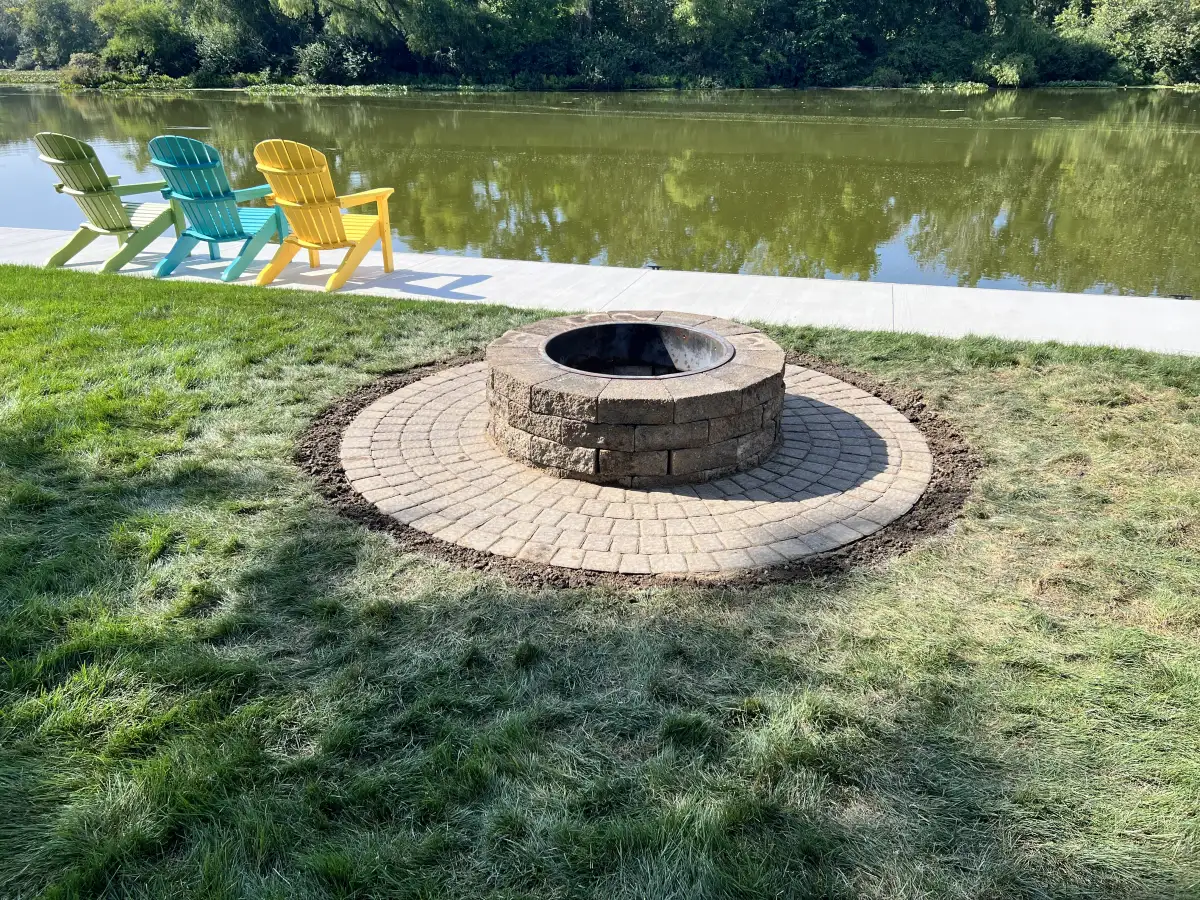
A patio is the most used hardscape feature on most residential properties. It is where you eat dinner outside, where you set up the grill on weekends, and where you sit with a coffee on spring mornings before the neighborhood wakes up. When a patio is installed correctly on Central Ohio's clay soils, it lasts decades without settling, heaving, or becoming a drainage problem. When it is installed wrong, you notice within the first winter.
This guide covers the complete patio installation process for homeowners in Marysville, Dublin, Powell, Plain City, and the surrounding area. From material selection through final sealing, here is what to expect and what questions to ask before your project starts.
Choosing the Right Patio Material
The material you choose determines how your patio looks, how it handles Ohio's freeze-thaw cycles, and what it costs to install and maintain. Every option has trade-offs, and the right choice depends on your budget, aesthetic preferences, and how you plan to use the space.
Concrete Pavers
Interlocking concrete pavers are the most popular patio material in Central Ohio for good reason. They are manufactured to precise dimensions, come in hundreds of colors, textures, and patterns, and they handle freeze-thaw cycles better than any other patio surface. Because pavers are individual units laid on a sand bed over compacted aggregate, the entire system flexes with seasonal ground movement rather than cracking. If a single paver is damaged or stained, you can pull it out and replace it without touching the rest of the patio.
Standard concrete pavers range from $3 to $8 per square foot for materials alone. Premium brands like Belgard, Unilock, and Pavestone offer tumbled, textured, and large-format options that mimic natural stone at a fraction of the cost. Installed, a concrete paver patio in our area typically runs $18 to $30 per square foot depending on the product and pattern complexity.
Natural Stone
Flagstone, bluestone, and limestone create a distinctive, high-end look that manufactured products cannot fully replicate. Natural stone patios are popular in Dublin and Powell neighborhoods where the home value supports the investment. The irregular shapes and natural color variation give each patio a unique character.
The trade-off is cost and installation time. Natural stone is heavier, requires more cutting, and takes longer to lay than manufactured pavers. Material costs run $8 to $20 per square foot, and installed prices range from $25 to $45 per square foot. Stone surfaces can also be slightly uneven, which matters if you plan to use the patio for dining with table legs that wobble on irregular surfaces.
Poured Concrete
A poured concrete slab is the most affordable patio option at $10 to $18 per square foot installed. Stamped and stained concrete can create attractive patterns that approximate the look of pavers or stone at a lower price point. The disadvantage in Central Ohio is cracking. Concrete is rigid, and Ohio's freeze-thaw cycles create ground movement that eventually cracks any concrete slab. Properly placed control joints minimize visible damage, but hairline cracks are virtually guaranteed within the first few years.
Once a concrete patio cracks, repair options are limited. You can fill cracks with caulk, but the repair is always visible. With pavers, you can relevel, re-sand, or replace individual units to restore the surface to like-new condition.
Why Base Preparation Is the Most Important Step
In Central Ohio, the ground beneath your patio is heavy clay soil that holds water, expands when wet, contracts when dry, and heaves when frozen. Without a properly engineered base, any patio surface you put on top of that clay will move, settle, and eventually fail. The base is the part of the patio you never see, and it is the part that determines whether your patio looks the same in year ten as it did in year one.
Excavation
Every patio starts with excavation. We dig out the existing soil to a depth of 8 to 10 inches below the planned finished surface level. This removes the organic topsoil layer (which decomposes and compresses over time) and provides room for the aggregate base, sand setting bed, and paver thickness. On sloped sites, excavation also establishes the grade that directs water away from the house foundation.
Aggregate Base
The excavated area is filled with compacted crushed limestone aggregate in lifts of 2 to 3 inches at a time. Each lift is compacted with a plate compactor before the next layer is added. The total aggregate base depth for a residential patio in our area is typically 6 inches, which provides adequate load distribution and drainage for the clay soils found across Union County and Franklin County.
This is where shortcuts cause problems. A contractor who skips the aggregate base or uses only 2 to 3 inches of material to save time is building a patio that will settle within the first year. The aggregate base is not optional in Central Ohio. It is the structural foundation of the entire project.
Sand Setting Bed
On top of the compacted aggregate, we spread a 1-inch layer of concrete sand, screeded to a precise, level surface. This sand bed is what the pavers actually sit on. It allows for minor adjustments during installation and provides a uniform surface that distributes load evenly across all pavers. The sand is not compacted before paver placement; it gets its final compaction after all pavers are laid and the surface is run over with the plate compactor.
The Installation Process Step by Step
Understanding the installation sequence helps you know what to expect on your property and how to evaluate the work being done.
Step 1: Layout and Marking
The patio footprint is marked on the ground using spray paint or stakes and string. This is when you confirm the size, shape, and position relative to your house, yard, and any existing landscape features. Changes are easy at this stage and expensive later.
Step 2: Excavation and Base Installation
Sod and topsoil are removed, the subgrade is compacted, and aggregate base is installed and compacted in lifts. Edge restraints (typically heavy-duty plastic or aluminum) are staked around the perimeter to prevent pavers from shifting outward over time.
Step 3: Paver Installation
Pavers are laid in the chosen pattern, starting from a straight reference edge (usually the house wall or a snapped chalk line). Each paver is placed tightly against its neighbors. Cuts are made with a wet saw for pavers that meet edges, curves, or obstacles. A skilled installer cuts once, accurately, with minimal waste.
Step 4: Compaction and Joint Sand
After all pavers are placed, the entire surface is compacted with a plate compactor using a protective pad to prevent surface scuffing. This seats the pavers into the sand bed and locks them together. Polymeric sand is then swept into all joints and activated with water. Polymeric sand hardens to resist weed growth, ant intrusion, and washout, a significant upgrade over standard joint sand that traditional methods used.
Step 5: Cleanup and Final Grading
Excess sand is blown off the patio surface, disturbed lawn areas around the perimeter are graded and either seeded or sodded, and the site is cleaned. The finished patio should have a consistent 1 to 2 percent slope away from the house to direct water toward the yard.
Drainage Considerations for Ohio Patios
Water management is critical for any hardscape project in Central Ohio. The region averages 38 inches of precipitation annually, and the clay soils drain slowly. A patio that does not shed water properly creates puddles on the surface and can direct runoff toward your foundation.
Every patio we install is graded to slope away from the house at a minimum of 1 percent (approximately 1/8 inch per foot). For patios that abut retaining walls, garden beds, or other features that block natural drainage paths, we install a French drain or channel drain at the low edge to capture and redirect water. This prevents the saturation of the aggregate base, which is the condition that leads to paver settling and heaving.
If your property has known drainage problems, addressing them before or during patio construction is always cheaper than fixing them after the patio is in place.
How Long the Process Takes
A typical residential patio of 200 to 400 square feet takes 3 to 5 working days from excavation to completion. The timeline breaks down roughly as follows:
- Day 1: Excavation and subgrade preparation
- Day 2: Aggregate base installation and compaction
- Day 3: Sand screeding and paver installation begins
- Day 4: Paver installation continues, cuts completed
- Day 5: Compaction, polymeric sand, cleanup, and final grading
Larger patios, projects with complex patterns or curves, and sites that require significant grading work can take a week or longer. We schedule all work through our project calendar and provide estimated completion dates before starting.
Maintaining Your Patio After Installation
A properly installed paver patio requires minimal maintenance, but a few annual tasks keep it looking new and performing well for decades.
- Annual polymeric sand refresh: Check joints each spring. If sand has washed out in spots, add fresh polymeric sand, sweep it in, and activate with water. This keeps joints sealed against weeds and ants.
- Pressure washing: Every 2 to 3 years, a light pressure wash removes algae, moss, and accumulated dirt. Use a fan tip, not a turbo nozzle, and keep the pressure under 2,000 PSI to avoid damaging the paver surface.
- Sealing (optional): A penetrating sealer applied every 3 to 5 years enhances color, resists staining, and makes routine cleaning easier. Sealers are not mandatory but are a worthwhile investment for premium paver products.
- Snow removal: Pavers handle snow removal well. Use a plastic-edged shovel or snow blower. Avoid metal blades that can chip paver surfaces. Deicing salt is safe for concrete pavers but can discolor natural stone.
Frequently Asked Questions
How much does a patio cost to install in Central Ohio?
A professionally installed paver patio in Central Ohio typically costs $18 to $30 per square foot, depending on the material, pattern complexity, and site conditions. A standard 300 square foot patio runs between $5,400 and $9,000 installed. Concrete patios are less expensive at $10 to $18 per square foot, while natural stone ranges from $25 to $45 per square foot.
What is the best patio material for Ohio's freeze-thaw climate?
Interlocking concrete pavers are the best overall choice for Ohio patios. They flex with freeze-thaw movement rather than cracking, individual units can be replaced if damaged, and they come in hundreds of colors and patterns. Natural flagstone and porcelain pavers also perform well when installed on a proper aggregate base with polymeric sand joints.
How long does patio installation take in Ohio?
A typical residential patio of 200 to 400 square feet takes 3 to 5 days from excavation to completion. Larger projects, patios with complex patterns, or sites requiring significant grading or drainage work may take a week or more. Weather delays are possible in spring and fall.
When is the best time to install a patio in Ohio?
Late spring through early fall (May through October) is the ideal window for patio installation in Central Ohio. The ground is workable, compaction is reliable, and polymeric sand activates properly in warmer temperatures. May and June bookings get the patio ready for full summer enjoyment.
Start Your Patio Project This Spring
May and June are peak hardscaping season in Central Ohio, and our schedule fills quickly. If you want a new patio ready for summer entertaining, now is the time to get on the calendar. We provide free on-site estimates that include material recommendations, a detailed layout, and a clear price with no hidden fees.
Call us at (937) 243-9488 or request your free estimate online. We serve Marysville, Dublin, Powell, Plain City, Bellefontaine, and the surrounding Central Ohio area.